
COLLECTIBLES IN GAMING STATISTICS 2026
From Pokémon cards to scalpers to skins: how scarcity moved from cardboard into online games.
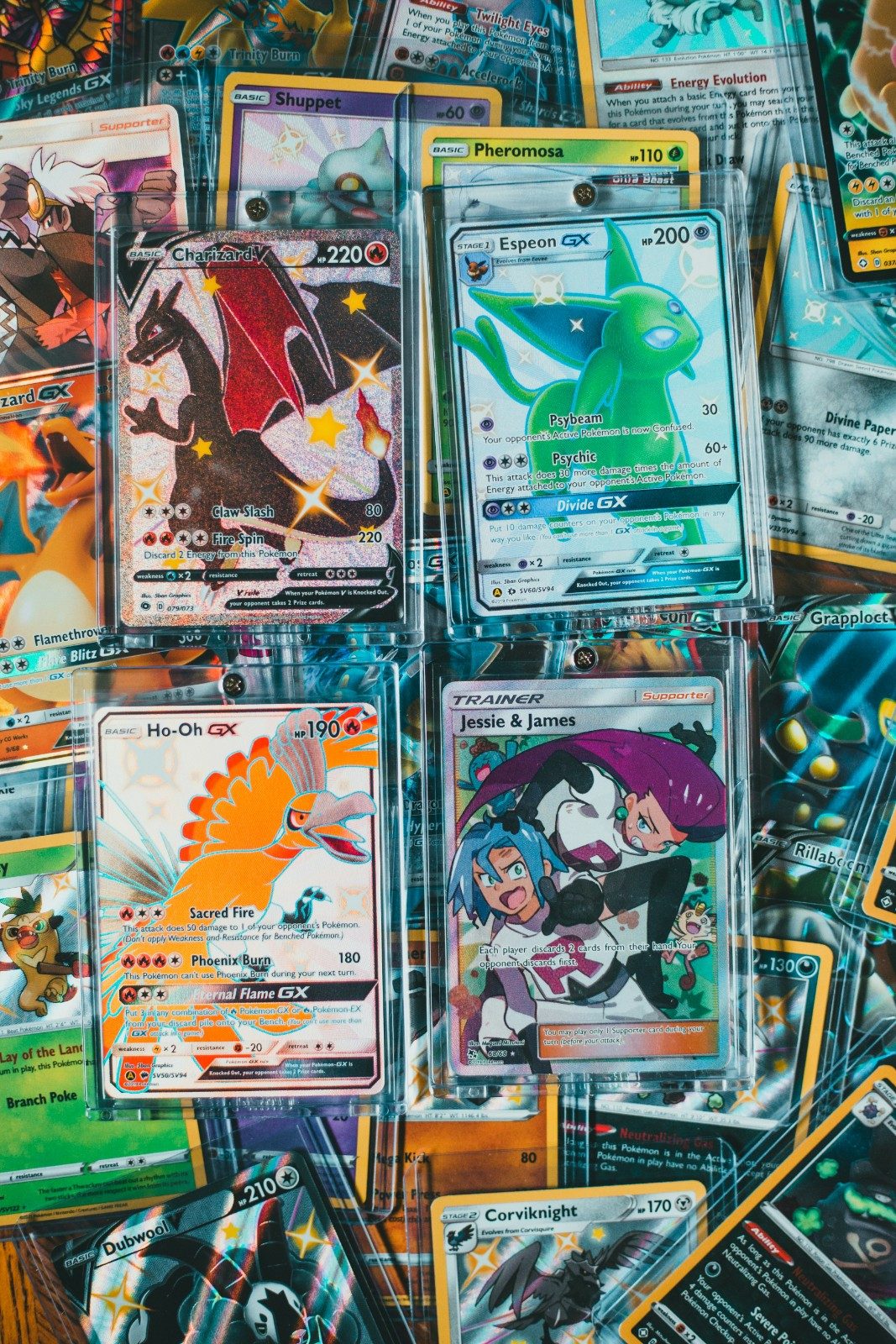
Collectibles in gaming are cards, stickers and in-game items that players gather into sets, trade and resell. They started as cardboard, scarcity turned them into speculative assets, and online games now build that same scarcity into their design. The Pokémon Company had produced more than 85 billion Pokémon cards by March 31, 2026, sealed boxes from recent sets resell for up to 941% above list price, and one Counter-Strike 2 update erased about $2.4 billion in skin value in 29 hours.
Key collectibles in gaming statistics at a glance
- Physical era: The Pokémon Company produced a record 11.9 billion cards in FY2024, almost eight times its FY2019 output of 1.5 billion.
- Scalping era: Target suspended in-store trading card sales from May 14, 2021. In 2026 Engadget reported GameStop marking up Pokémon cards by more than 300%.
- Online games: The CS2 skin market passed $6 billion on October 17, 2025, then fell to about $3.65 billion after a single Valve update.
- Online games: Pokémon TCG Pocket made nearly $1.3 billion in its first 12 months (AppMagic estimate).
Part 1: The physical era
Collecting began on paper. The modern trading card boom began with one game, and its production record shows how far physical collecting has scaled.
- 1970Panini prints its first World Cup sticker album, for the tournament in Mexico (SI).
- October 1996The Pokémon Trading Card Game launches in Japan (Bulbapedia).
- 1999Wizards of the Coast brings the Base Set to North America and the first craze follows.
- 2020–21Pandemic boom. Output climbs to 3.7 billion cards in FY2021, and Target pulls cards from stores in May 2021 after a confrontation in a store parking lot.
- FY2022Output jumps 146% to 9.1 billion cards, the start of the 9 billion-plus era.
- FY2024Record year: 11.9 billion cards.
- FY2026Roughly 10 billion cards; the lifetime total passes 85 billion.
Pokémon cards produced by year
The Pokémon Company reports cards produced by fiscal year, ending March 31. Production stood at 1.5 billion cards in FY2019 and 3.1 billion in FY2020. FY2021 reached 3.7 billion, taking the lifetime total to 34.1 billion.
The step change came in FY2022, the franchise’s 25th anniversary year. Production hit 9.1 billion cards, up 146%, and the lifetime count reached 43.2 billion. FY2023 added 9.7 billion cards produced.
FY2024 set the record at 11.9 billion cards produced, for 93 countries and regions. FY2025 brought the first year-over-year drop, to 10.2 billion, and FY2026 held near that level at roughly 10 billion.
Billions of cards produced. FY2024 was the record year.
Fiscal years end March 31. FY2026 is approximate. Figures as reported by PokeGuardian from The Pokémon Company.
Cumulative since 1996, at the end of each fiscal year, in billions.
Totals as reported. Some outlets give the FY2024 total as 64.8 billion (Pokezentrum) and others as 64.9 billion (PokeGuardian); the difference is rounding.
| Fiscal year (ends March 31) | Pokémon cards produced | Lifetime total (cumulative since 1996, as reported) | Source |
|---|---|---|---|
| FY2019 | 1.5 billion | — | PokeGuardian |
| FY2020 | 3.1 billion | — | PokeGuardian |
| FY2021 | 3.7 billion | 34.1 billion | PokeGuardian |
| FY2022 | 9.1 billion | 43.2 billion | PokeGuardian |
| FY2023 | 9.7 billion | 52.9 billion | PokeGuardian |
| FY2024 | 11.9 billion | 64.8–64.9 billion | PokeGuardian |
| FY2025 | 10.2 billion | 75 billion+ | PokeGuardian |
| FY2026 | Roughly 10 billion | 85 billion+ | PokeGuardian |
History: the sticker album
Sticker albums set the template that mobile games later copied. Panini’s 2018 World Cup album held 681 stickers, and in 2010 the company sold more than 10 million World Cup packs in the US alone, according to Sports Illustrated. These are historical figures, not current sales. The format is simple: empty spaces, random packs, duplicates to trade and a full set to chase.
Part 2: Scarcity turned cards into assets
The pandemic boom changed who was buying. Cards that had been bought to open were bought to resell, and the people restocking shelves were no longer the only ones watching delivery days.
Retailers started rationing
In May 2021, Target said it would temporarily suspend in-store sales of MLB, NFL, NBA and Pokémon trading cards from May 14, “out of an abundance of caution”, after a confrontation in a store parking lot in Wisconsin. Some Walmart stores also removed trading cards from the sales floor. Online sales continued.
By 2025, limits were standard. On May 20, 2025, ahead of the May 30 release of Scarlet & Violet: Destined Rivals, GameStop said new Pokémon TCG products would be limited to one per customer, per product type.
The retailer became the reseller
In July 2026, Engadget reported that GameStop was marking up Pokémon cards by more than 300 percent for the franchise’s 30th anniversary products, asking prices it compared with what resellers charge. Kotaku reported the anniversary Elite Trainer Box at nearly three times the usual price.
| Product (2026) | GameStop price | Comparison price | Markup |
|---|---|---|---|
| 30th Anniversary Elite Trainer Box | $170 (in store) | $55 typical ETB retail | +209% (Albumza calculation) |
| Ascended Heroes Booster Bundle | $90 | Just under $27 at Pokémon Center | +233% (Albumza calculation) |
| 30th Anniversary Ultra-Premium Collection | $600 | $120 for the previous set’s equivalent | +400% (Engadget) |
What sealed product resells for
To measure the resale gap, Albumza compared the list price of sealed products from four recent sets with their current resale value on PriceCharting, checked on October 8, 2026. Every product resells above list price. The oldest, the Scarlet & Violet 151 Elite Trainer Box from 2023, resells for 941% more than its $49.99 list price.
Markup over list price, %. Albumza calculation, October 8, 2026.
Resale: PriceCharting ungraded value. List price: $49.99 per ETB; booster boxes $161.64 (36 packs × $4.49). Markup = (resale − list price) ÷ list price.
| Product (release) | List price | Resale (Oct 8, 2026) | Markup |
|---|---|---|---|
| Scarlet & Violet 151 Elite Trainer Box (Sep 2023) | $49.99 | $520.56 | +941.3% |
| Prismatic Evolutions Elite Trainer Box (Jan 2025) | $49.99 | $147.36 | +194.8% |
| Destined Rivals Booster Box (May 2025) | $161.64 | $414.50 | +156.4% |
| Surging Sparks Booster Box (Nov 2024) | $161.64 | $299.99 | +85.6% |
The paradox: record supply, empty shelves
The Pokémon Company has produced between 9 and 12 billion cards a year since FY2022, more than at any earlier point. Yet new sets still sell out, retailers ration them and sealed product resells far above list price. Production at record highs alongside shortages is the core tension of the scalping era: demand driven by resale value grows with the market, so higher print runs have not closed the gap.
Part 3: The scarcity model moved online
Online games inherited the collecting loop and changed one thing: the developer now controls supply directly. The shift happened in three steps.
Step 1: Digital packs
Pokémon TCG Pocket launched on October 30, 2024. It moves the core loop of the physical game, opening packs and completing sets, to phones, with battling optional. AppMagic estimates it made nearly $1.3 billion in its first 12 months and passed 150 million downloads. The same report puts Pokémon Go at roughly $1 billion over its first 12 months, so on these estimates the card game earned about 30% more over each game’s first 12 months (Albumza calculation).
US dollars, billions (AppMagic estimates).
Third-party estimates, not company-reported results. Source: Insider Gaming.
Step 2: Album mechanics
Monopoly GO launched in April 2023. Its sticker albums group stickers into sets of 9 and run in seasons; when a season ends, unfinished stickers disappear. Sensor Tower estimates the game surpassed $6 billion in lifetime in-app purchase revenue in 2025, the fastest mobile game to reach that level, and ranked it the No. 1 mobile game by in-app revenue in 2024. Publisher Scopely puts its revenue at about $200 million a month, according to the same Sensor Tower report.
Coin Master, which also uses card collections, had generated more than $6 billion in revenue globally by August 2024, with nearly $1.2 billion in annual revenue since 2020, according to Sensor Tower. Newer annual figures have not been published.
Step 3: Skins with real resale markets
Counter-Strike 2 skins are cosmetic weapon finishes that players trade on Steam’s Community Market and on third-party sites, much as cards trade on secondary markets. On October 17, 2025, the market’s estimated value passed $6 billion for the first time, according to the tracker Pricempire.
Days later, a Valve update on October 22–23, 2025 let players craft knives and gloves through trade-up contracts, turning five high-tier skins into one of the game’s scarcest items. Scarcity disappeared overnight. Reported losses vary by timeframe: about $1.7 billion in under 24 hours (Dust2.us), nearly $2 billion overnight (Sportskeeda) and about $2.4 billion in 29 hours, from about $6.06 billion to $3.65 billion (pley.gg). All three cite Pricempire data. By November 11 the market had recovered to $5.16 billion.
Estimated total value, US$ billions. About 40% lost peak to trough (Albumza calculation).
Pricempire estimates, as reported by Dexerto, pley.gg and Dust2.us. Trackers and timeframes differ, so figures are approximate.
The lesson for online games is about who controls supply. With cards, scarcity depends on print runs and on how much resellers buy up. In an online game, the developer sets supply with a patch. One update did in a day what a reprint or a wave of scalping does to cards over months, which makes developers the central bank of their game’s economy. Speculation, bots and resale markups now happen inside game economies too.
The impact on players and developers
Time-limited albums create urgency
A printed album can sit half-finished on a shelf. Many digital albums reset on a schedule: in Monopoly GO, unfinished stickers disappear when the season ends. Deadlines turn a completed set into something players fear missing, which is the same pressure that drives shoppers to line up for a new card set.
Supply is controlled by the platform
With physical cards, no single player can create more of a card. In online games, supply, drop rates and crafting rules can change with any update, as the CS2 trade-up change showed. Players hold items whose value depends on decisions they cannot see coming.
Secondary markets decide who profits
Resale value flows to whoever buys early and sells late: resellers with bots and early access, retailers that set their own markups and, in online games, platforms that host the market and take transaction fees. Players who collect to complete sets usually buy at the higher price.
Smaller studios feel the pressure
With album games earning billions, smaller developers face pressure to copy seasonal albums, random packs and tradable items. These systems need constant tuning, and the CS2 example shows how quickly a single change can upset an in-game economy.
Some games publish drop rates for each rarity tier and some do not; where rates are listed, players can estimate how many packs a full set will take. App store and console settings can also cap purchases.
The share of players who pay
Revenue totals are large; the share of players who pay is small. The UK government’s July 2022 response on loot boxes cites Ipsos MORI finding that 7% of players paid for a loot box in the 12 months to December 2020, and Ofcom finding that 6% of children bought loot boxes in free-to-play games and 3% in paid games.
Percent of respondents. Bars are scaled to 10%.
Source: GOV.UK, government response to the call for evidence on loot boxes in video games (July 2022).
The consequence: regulators push back
As paid random items spread, regulators responded. Loot box laws by country do not follow one model: some apply existing law, others act through consumer or child-protection rules. The table lists actions newest first.
| Date | Country | Action |
|---|---|---|
| Sep 17, 2025 | Brazil | Law 15,211 bans loot boxes in games aimed at, or likely to be accessed by, minors. |
| Jan 16, 2025 | Belgium | An Antwerp court rules paid loot boxes in a mobile game unlawful under Belgian law. |
| Jan 18, 2023 | European Union | The European Parliament votes 577 to 56 for a resolution asking the Commission to analyse loot boxes and check whether EU law is sufficient. |
| July 2022 | United Kingdom | The government decides against new legislation and backs industry-led protections, including parental approval for purchases by under-18s. |
| Apr 25, 2018 | Belgium | The Belgian Gaming Commission finds paid loot boxes in FIFA 18, Overwatch and CS:GO unlawful, with penalties of up to five years in prison and €800,000 in fines. |
| May 2012 | Japan | Reports of a ban on “kompu gacha” send GREE shares down 23.3% and DeNA 20.1% on May 7; the Consumer Affairs Agency declares the mechanic illegal on May 18, effective July 2012. |
Japan’s case came first and is the closest to the album mechanic. Kompu gacha, short for “complete gacha”, asked players to pay to complete a set of random items to unlock a rarer reward: an album with a paywall on the final card. Japan targeted that design rather than random items as a whole.
What the data points toward
Collecting has never been bigger. The Pokémon Company produced 1.5 billion cards in FY2019 and 11.9 billion in FY2024, almost eight times as many, and has produced more than 85 billion cards since 1996. Physical collecting did not fade as games moved online; it grew alongside them.
Scarcity, not supply, sets the price. Even with 9 to 12 billion Pokémon cards produced each year since FY2022, sealed products resell well above list price: 86% above for a 2024 booster box and 941% above for a 2023 Elite Trainer Box, according to an Albumza calculation from PriceCharting data. More printing has not ended shortages, because demand driven by resale value grows with the market.
Speculation reshaped retail. In 2021 Target paused in-store card sales for safety reasons; by 2025 GameStop limited new Pokémon products to one per customer; and in 2026 Engadget reported GameStop selling Pokémon products at more than 300% markups. Retailers moved from fighting resale prices to charging them.
Online games put scarcity in the developer’s hands. When Valve let players craft knives and gloves in Counter-Strike 2 in October 2025, the estimated skin market fell from about $6.06 billion to $3.65 billion in 29 hours, a drop of about 40%. In online games, one patch can do what a print run or a wave of scalpers does to cards, which makes the developer the central bank of its game’s economy.
Original calculations
The following figures are Albumza calculations from the public data cited on this page.
- +146%: rise in Pokémon cards produced from FY2021 (3.7 billion) to FY2022 (9.1 billion).
- 7.9×: FY2024 output (11.9 billion) compared with FY2019 (1.5 billion).
- +86% to +941%: resale markup over list price for sealed products from four recent Pokémon sets, PriceCharting values on October 8, 2026.
- +209%: GameStop’s $170 in-store price for the 30th Anniversary Elite Trainer Box against a typical $55 ETB price.
- ~40%: share of estimated CS2 skin-market value lost peak to trough after the October 2025 update ($6.06 billion to $3.65 billion).
- 86%: share of the $6 billion October 2025 peak the CS2 market had regained by November 11, 2025 ($5.16 billion).
- +30%: Pokémon TCG Pocket’s estimated revenue over its first 12 months compared with Pokémon Go’s.
FAQ
How many Pokémon cards have been made?
The Pokémon Company had produced more than 85 billion Pokémon cards by March 31, 2026, cumulative since 1996, according to figures reported by PokeGuardian. Roughly 10 billion were produced in FY2026. The record year was FY2024, at 11.9 billion cards produced.
Why are Pokémon cards hard to find?
Production is at record levels, between 9 and 12 billion cards a year since FY2022, but demand from resellers absorbs much of it. Retailers have responded with limits, such as GameStop’s one-per-customer rule in May 2025, and sealed products from recent sets resell for 86% to 941% above list price (Albumza calculation).
What happened to the CS2 skin market?
On October 22–23, 2025, a Valve update let Counter-Strike 2 players craft knives and gloves through trade-up contracts, making the game’s scarcest items easier to get. The estimated skin market, which had passed $6 billion days earlier, fell to about $3.65 billion within 29 hours, according to Pricempire data. It had recovered to about $5.16 billion by November 11, 2025.
Which album-based mobile game earns the most?
Among the games covered here, Monopoly GO earns the most. Sensor Tower estimates it passed $6 billion in lifetime in-app revenue in 2025 and was the No. 1 mobile game by in-app revenue in 2024. The sources do not separate sticker album revenue from the game’s total earnings.
Which countries ban loot boxes?
Brazil’s Law 15,211, adopted September 17, 2025, bans loot boxes in games aimed at or likely to be accessed by minors. In Belgium, the Belgian Gaming Commission found paid loot boxes unlawful in 2018, and an Antwerp court reached a similar conclusion in January 2025.
What is kompu gacha?
Kompu gacha, short for “complete gacha”, is a mechanic in which players pay to complete a set of random items to unlock a rarer reward. After reports of a ban, GREE shares fell 23.3% and DeNA shares 20.1% on May 7, 2012. Japan’s Consumer Affairs Agency declared it illegal on May 18, 2012, effective that July.
Methodology
These collectibles in gaming statistics were compiled from company disclosures, app intelligence firms, price trackers, news reports and government documents. Data is current to October 8, 2026. Pokémon card figures are The Pokémon Company’s numbers as reported by PokeGuardian; fiscal years end March 31, lifetime totals are cumulative since 1996, and all figures count cards produced, not cards sold to individual buyers. Mobile revenue figures from Sensor Tower and AppMagic are third-party estimates. CS2 market values are Pricempire estimates as reported by the outlets cited, and differ by timeframe.
Albumza calculations: resale markups use PriceCharting’s ungraded value on October 8, 2026 against list prices of $49.99 per Elite Trainer Box and $161.64 per booster box (36 packs × $4.49), using the formula (resale − list price) ÷ list price. Booster boxes are not sold at an official US list price, so their list price is derived from the pack price. Percentage changes elsewhere use the figures shown on this page. The numbers measure different units and should not be added together or compared directly across categories.
Sources
- PokeGuardian: Pokémon card production hits 85 billion
- PokeGuardian: 3.7 billion Pokémon cards in fiscal year 2020–2021
- PokeGuardian: Over 9 billion Pokémon cards in fiscal year 2021–2022
- PokeGuardian: Nearly 10 billion Pokémon cards in fiscal year 2022–2023
- PokeGuardian: Nearly 12 billion Pokémon cards in fiscal year 2023–2024
- PokeGuardian: Over 10 billion Pokémon cards in fiscal year 2024–2025
- Pokezentrum: 64.8 billion Pokémon cards (May 2024)
- Bulbapedia: Pokémon Trading Card Game
- Sports Illustrated: Panini World Cup sticker album history and tradition
- VGC: Target and Walmart stores will stop selling Pokémon cards for safety reasons
- esports.gg: GameStop restricts Pokémon TCG Destined Rivals purchases
- Engadget: GameStop is marking up Pokémon cards by more than 300 percent
- Kotaku: GameStop inflating Pokémon 30th anniversary card prices
- PriceCharting: Scarlet & Violet 151 Elite Trainer Box
- PriceCharting: Prismatic Evolutions Elite Trainer Box
- PriceCharting: Destined Rivals Booster Box
- PriceCharting: Surging Sparks Booster Box
- CodedYellow: Scarlet & Violet 151 Elite Trainer Box and Prismatic Evolutions Elite Trainer Box
- Card Codex: Which sealed product is best value
- Insider Gaming: Pokémon TCG Pocket first-year revenue estimates hit $1.3 billion
- Sensor Tower: Monopoly GO revenue milestone
- Dexerto: Monopoly GO sticker album end
- Sensor Tower: Coin Master reaches $6 billion in revenue
- Dexerto: CS2 skins market value hits new all-time high
- Dust2.us: CS2 skins market craters $1.7 billion after October 22 update
- Sportskeeda: Why the CS2 skins market crashed on October 23, 2025
- pley.gg: CS2 skin market loses $2.4 billion in 29 hours
- Dust2.us: CS2 skins market holds steady above $5 billion
- GOV.UK: Government response to the call for evidence on loot boxes in video games
- Inside Privacy: Brazil adopts law protecting minors online
- Siege.gg: EU countries introduce stricter loot box regulations in 2025
- Game World Observer: European Parliament vote on loot boxes
- Engadget: Belgium rules loot crates illegal (2018)
- The Next Web: GREE and DeNA shares fall on kompu gacha reports
- Bloomberg: Japan consumer agency says complete gacha feature illegal
